Tuesday, February 3, 2009

The Day the Music Died


On February 3, 1959, a small-plane crash near Clear Lake, Iowa, United States killed three American rock and roll musicians: Buddy Holly, Ritchie Valens, and J. P. "The Big Bopper" Richardson, as well as the pilot, Roger Peterson. The day was later called The Day the Music Died by Don McLean in his 1971 song "American Pie".

Recorded and released on the American Pie album in 1971, the single was a number-one U.S. hit for four weeks in 1972.

The song is an abstract story of his life that starts with the deaths of Buddy Holly, Ritchie Valens, and J. P. Richardson (The Big Bopper) in a plane crash in 1959, and ends in 1970; in the song he called the plane crash "the day the music died."

The song's lyrics are the subject of much curiosity. Although McLean dedicated the American Pie album to Buddy Holly, none of the singers in the airplane crash are identified by name in the song itself.

Monday, February 2, 2009

I Will Be Off Work a Few Days


Slipped on some oil and in the process of breaking my fall I dislocated a finger on my right hand.

I was very impressed with the care I got at Central Valley Occupational Medical Group. This is the work comp facility that my employer uses. One hour and ten minutes is all it took from the minute I walked in until the minute I walked out.

Dr. Kamal Eldrageely was the physician that reset my dislocated finger. I opted not to have shots into the finger to numb it before being reset. I told the Doc he could have one shot, not to screw it up!

I'll have Hot & Cold pack for two days then will start Occupational therapy on Monday.

Sunday, February 1, 2009

Brief History of the Super Bowl

In 1961 the AFL and NFL agreed to merge together to create one "Super League" called the NFL. In this agreement between the AFL and the NFL they arranged to begin playing a championship game between two conferences the AFC and NFC after the 1966 season.

Originally the Championship game was named the AFL - NFL Championship, but it was soon nicknamed the Super Bowl. According to one story, one NFL team owner, Lamar Hunt, architect of the AFL and owner of the Kansas City Chiefs, thought the formal title was... well, too formal. Lamar came up with the new name while watching his daughter play with a super ball and was given the inspiration for the name "Super Bowl" for the championship game between the upstart American Football League and the old-guard National Football League. The truth is probably more mundane and the name was most likely created by a sportswriter who invented the tag. As is apt to happen the name "Super Bowl" was immediately picked up by the rest of the NFL community and then finally by the NFL.

Since the AFL and NFL merger, the Super Bowl has been the NFL Championship Game, played between the NFC and AFC champions, who first have to make the playoffs then emerge as the conference champions from those playoff games.

The Superbowl is the climax of the season, but unfortunately the Super Bowl has all too often been anti-climactic. Surprisingly the average margin of victory has been about 14 points. The 14 point Superbowl victory margin is well above the average for a regular - season NFL game. Historically the conference championship games have been more interesting to watch as the games are far more competitive.

Monday, January 19, 2009

Inauguration Day Janurary 20, 2009

Inauguration Trivia

George Washington's was the shortest inaugural address at 135 words (1793). William Harrison's was the longest at 8,445 words. (1841)

Thomas Jefferson was the only president to walk to and from the inaugural, and the first to be inaugurated at the Capitol. (1801)

The first inaugural ball was held for James Madison. (1809)

Abraham Lincoln was the first to include African-Americans in his parade. (1865)

Women were included for the first time in Woodrow Wilson's second inaugural parade. (1917)

The first president to ride in a car at his inauguration was Warren Harding. (1921)

Calvin Coolidge's inauguration was the first broadcast on radio. (1925)

The parade for Franklin Roosevelt's fourth swearing-in was canceled because of gas and lumber shortages brought on by World War II. (1945)

Harry Truman had the first televised inauguration. (1949)

John Kennedy's was the first to be televised in color. (1961)

The first poet to participate in an official inauguration ceremony was Robert Frost. (Kennedy's, 1961)

Lyndon Johnson remains the only president to be sworn in by a woman, U.S. District Judge Sarah Hughes. (1963)

Ronald Reagan's second parade was held on Super Bowl Sunday. (1985).

Bill Clinton's second inauguration was the first to be broadcast on the Internet. (1997)

George W. Bush mentioned the word 'freedom' more than 20 times in his second inaugural address. (2005)

Barack Obama will be our 44th president and his inauguration will be the 56th formal one. Fifteen presidents were elected to a second term, and Roosevelt was elected to a fourth term. (2009)

Martin Luther King, Jr., (January 15, 1929-April 4, 1968) was born Michael Luther King, Jr., but later had his name changed to Martin. His grandfather began the family's long tenure as pastors of the Ebenezer Baptist Church in Atlanta, serving from 1914 to 1931; his father has served from then until the present, and from 1960 until his death Martin Luther acted as co-pastor. Martin Luther attended segregated public schools in Georgia, graduating from high school at the age of fifteen; he received the B. A. degree in 1948 from Morehouse College, a distinguished Negro institution of Atlanta from which both his father and grandfather had graduated. After three years of theological study at Crozer Theological Seminary in Pennsylvania where he was elected president of a predominantly white senior class, he was awarded the B.D. in 1951. With a fellowship won at Crozer, he enrolled in graduate studies at Boston University, completing his residence for the doctorate in 1953 and receiving the degree in 1955. In Boston he met and married Coretta Scott, a young woman of uncommon intellectual and artistic attainments. Two sons and two daughters were born into the family.

In 1954, Martin Luther King accepted the pastorale of the Dexter Avenue Baptist Church in Montgomery, Alabama. Always a strong worker for civil rights for members of his race, King was, by this time, a member of the executive committee of the National Association for the Advancement of Colored People, the leading organization of its kind in the nation. He was ready, then, early in December, 1955, to accept the leadership of the first great Negro nonviolent demonstration of contemporary times in the United States, the bus boycott described by Gunnar Jahn in his presentation speech in honor of the laureate. The boycott lasted 382 days. On December 21, 1956, after the Supreme Court of the United States had declared unconstitutional the laws requiring segregation on buses, Negroes and whites rode the buses as equals. During these days of boycott, King was arrested, his home was bombed, he was subjected to personal abuse, but at the same time he emerged as a Negro leader of the first rank.

In 1957 he was elected president of the Southern Christian Leadership Conference, an organization formed to provide new leadership for the now burgeoning civil rights movement. The ideals for this organization he took from Christianity; its operational techniques from Gandhi. In the eleven-year period between 1957 and 1968, King traveled over six million miles and spoke over twenty-five hundred times, appearing wherever there was injustice, protest, and action; and meanwhile he wrote five books as well as numerous articles. In these years, he led a massive protest in Birmingham, Alabama, that caught the attention of the entire world, providing what he called a coalition of conscience. and inspiring his "Letter from a Birmingham Jail", a manifesto of the Negro revolution; he planned the drives in Alabama for the registration of Negroes as voters; he directed the peaceful march on Washington, D.C., of 250,000 people to whom he delivered his address, "l Have a Dream", he conferred with President John F. Kennedy and campaigned for President Lyndon B. Johnson; he was arrested upwards of twenty times and assaulted at least four times; he was awarded five honorary degrees; was named Man of the Year by Time magazine in 1963; and became not only the symbolic leader of American blacks but also a world figure.

At the age of thirty-five, Martin Luther King, Jr., was the youngest man to have received the Nobel Peace Prize. When notified of his selection, he announced that he would turn over the prize money of $54,123 to the furtherance of the civil rights movement.

On the evening of April 4, 1968, while standing on the balcony of his motel room in Memphis, Tennessee, where he was to lead a protest march in sympathy with striking garbage workers of that city, he was assassinated.

Friday, January 9, 2009

Freedom


We are a free people, yet each day we see our freedoms eroded by well-meaning do-gooders intent on sabotaging our basic rights gifted to us under the Constitution.

Benjamin Franklin once wrote that "A society that gives up its rights in the interest of the governmental protection and safety guarantees that it will neither be safe, nor free."

In other words, one does not give up rights to protect rights.

Thursday, January 1, 2009

Happy New Year 2009

He who breaks a resolution is a weakling;
He who makes one is a fool.
~F.M. Knowles

Thursday, December 25, 2008

Merry Christmas, 2008

Remember the reason for the Season!


Saturday, December 6, 2008

December 7, 1941---Never Forget


Aircraft and midget submarines of the Imperial Japanese Navy began a surprise attack on the U.S. under the command of Admiral Isoroku Yamamoto. Despite long-standing assertions that this attack could have been predicted and prevented by the United States Military, the U.S. forces at Pearl Harbor appeared to be utterly unprepared, and the attack effectively drew the United States into World War II. At 6:09 a.m. on December 7, the six Japanese carriers launched a first wave of 183 planes composed mainly of dive-bombers, horizontal bombers and fighters. The Japanese hit American ships and military installations at 7:55 a.m. The first wave attacked military airfields of Ford Island. At 8:30 a.m. a second wave of 180 Japanese planes, mostly torpedo bombers, attacked the fleet anchored in Pearl Harbor. The battleship Arizona was hit with an armor-piercing bomb, which penetrated the forward ammunition compartment, blowing the ship apart and sinking it within seconds. Overall, nine ships of the U.S. fleet were sunk and twenty-one ships were severely damaged. Three of the twenty-one would be irreparable. The overall death toll reached 2,350, including 68 civilians, and 1,178 injured. Of the military personnel lost at Pearl Harbor, 1,177 were from the Arizona. The first shots fired were from the USS Ward on a midget submarine that had surfaced outside of Pearl Harbor, the USS Ward did successfully sink the midget sub at approximately 6:55, about an hour before the assault on Pearl Harbor.

Tuesday, December 2, 2008

Death Valley, California---Beatty, Nevada

It has been cold, wet, foggy and down right depressing here in the southern San Joaquin Valley the last couple of weeks. This is fog season and we can go for weeks without seeing the sun. So, this past week-end my buddy Jim and I took off for an over nighter through Death Valley with Beatty Nevada as our final destination. Beatty is 35 miles south east of Scotty's Junction.
Click on map to enlarge.

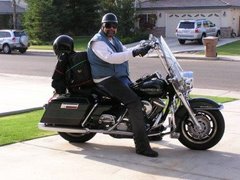
Here we are packed and ready to roll.
We left Bakersfield heading east on Highway 178 through the Kern Canyon up to Lake Isabella. We stopped at the "Dam Corner Cafe" which is located just below the dam that holds back the waters of Lake Isabella and had breakfast.
After breakfast we saddled up and continued east on Highway 178 until we hit Highway 14. Riding north on Highway 14 we soon merged with Highway 395 ending up in Lone Pine. After gassing up in Lone Pine we traveled east into Death Valley.
Stopping at "Stovepipe Wells Village" we ran into this group of riders who were also from Bakersfield.
When Bob Eichbaum envisioned a resort in Death Valley he could never have imagined that one day a million people a year would visit the park. Stovepipe Wells Village, a modest oasis named for a historic site located a few miles to the northeast. There, long ago, an old stovepipe was sunk into the sand to form the shaft for a much used well. Stovepaipe Wells is at sea level and just east of here a few miles the elevation drops to 232' below sea level. The lowest point in Death Valley is Bad Water at 282' below sea level making it the lowest point in the United States. Just 76 miles to the west is Mount Whitney which is the highest point in the continental United States standing at 14,505'
Panamint mountain range in the background.

We arrived at Beatty around 3 in the afternoon, finding this hotel, reserving a room then cleaning up for an evening in the casino...
After a few hours in the casino and having no luck what so ever we turned in for the night. Sunday morning we headed north out of town, after a few miles we came across this site...it was closed.
This plane was there...I would like to know the story behind it?
About 60 miles north of Beatty is "Scotty's Castle" named after "Death Valley Scotty". He told everyone that he built this castle in northern Death Valley with money from his "secret" gold mine. That was not quite the truth. A Chicago millionaire and his wife built their "Death Valley Ranch" in the cool of Grapevine Canyon and they let their friend Scotty live there as a guest.
Hidden in the green oasis of Grapevine Canyon in far northern Death Valley, the Death Valley Ranch, or Scotty's Castle as it is more commonly known, is a window into the life and times of the Roaring 20's and Depression 30's. It was and is an engineer's dream home, a wealthy matron's vacation home and a man-of-mystery's hideout and getaway. Walter Scott, Death Valley Scotty, convinced everyone that he had built the castle with money from his rich secret mines in the area. Albert Mussey Johnson actually built the house as a vacation getaway for himself and his wife Bessie. Scotty was the mystery, the cowboy, and the entertainer, but he was also a friend. Albert was the brains and the money. Two men as different as night and day, from different worlds and with different visions - who shared a dream.
Here you can see the "Castle" on the left, the guest house is on the right and in the background is the clock tower.
This is a generator that is powered by water. The valve you see in the front controls water flow into the volute which turns a generator that is coupled to it. Direct current is sent from the generator to a bank of 12 volt batteries which are used for lighting.There are many tunnels under the castle. The tunnels were used for all plumbing and electrical. Services like food, laundry and maids also used the tunnels. The tile you see in the photo below was purchased and shipped in from Spain for the pool which was never completed.After going through two different tours of the castle and guest house we headed south to the "Ubehebe Crater". The crater is a large volcanic crater 600 feet deep and half a mile across. This crater was created by steam and gas explosions when hot magma rising up from the depths reached ground water. The intense heat flashed the water into steam which expanded until the pressure was released as a tremendous explosion.After taking in the sights around the crater we made a bee line back to the cold, wet, foggy and down right depressing San Joaquin Valley... and that ends another Lumpy Adventure!


Note: I found the following information on the plane at the National Transportation Safety Board web site.


THE PILOT LANDED ON A 1700 LONG STRIP AT THE ELEVATION OF ABOUT 3500 FT MSL. HE ELECTED TO TAKEOFF TO THE NORTH IN CALM WIND CONDITIONS AND AVOID SUN GLARE OFF THE COVER OF HIS ENGINE AND ON THE WINDSHIELD. HE STATED THAT SOFT FIELD PROCEDURES WERE USED IN ORDER TO CLEAR A 30 FT HIGH POWER LINE CROSSING HIS PATH AT AN ANGLE. DURING TAKEOFF, HE PULLED THE NOSE UP TO CLEAR THE LINES. HE STATED THAT HE GOT ABOUT 20 T0 25 FT AGL WHEN THE POWER LINES STARTED COMING UP. HE BANKED LEFT TO AVOID THE LINES AND THE STALL WARNING HORN SOUNDED. WHEN HE KNEW THAT HE COULD NOT CLEAR THE LINES, HE SET THE PLANE DOWN IN A DRY WASH. THE AIRCRAFT TOUCHED DOWN ABOUT 600 FT FROM THE DEPARTURE END OF THE RUNWAY AND ALL GEAR COLLAPSED BEFORE IT CAME TO REST.